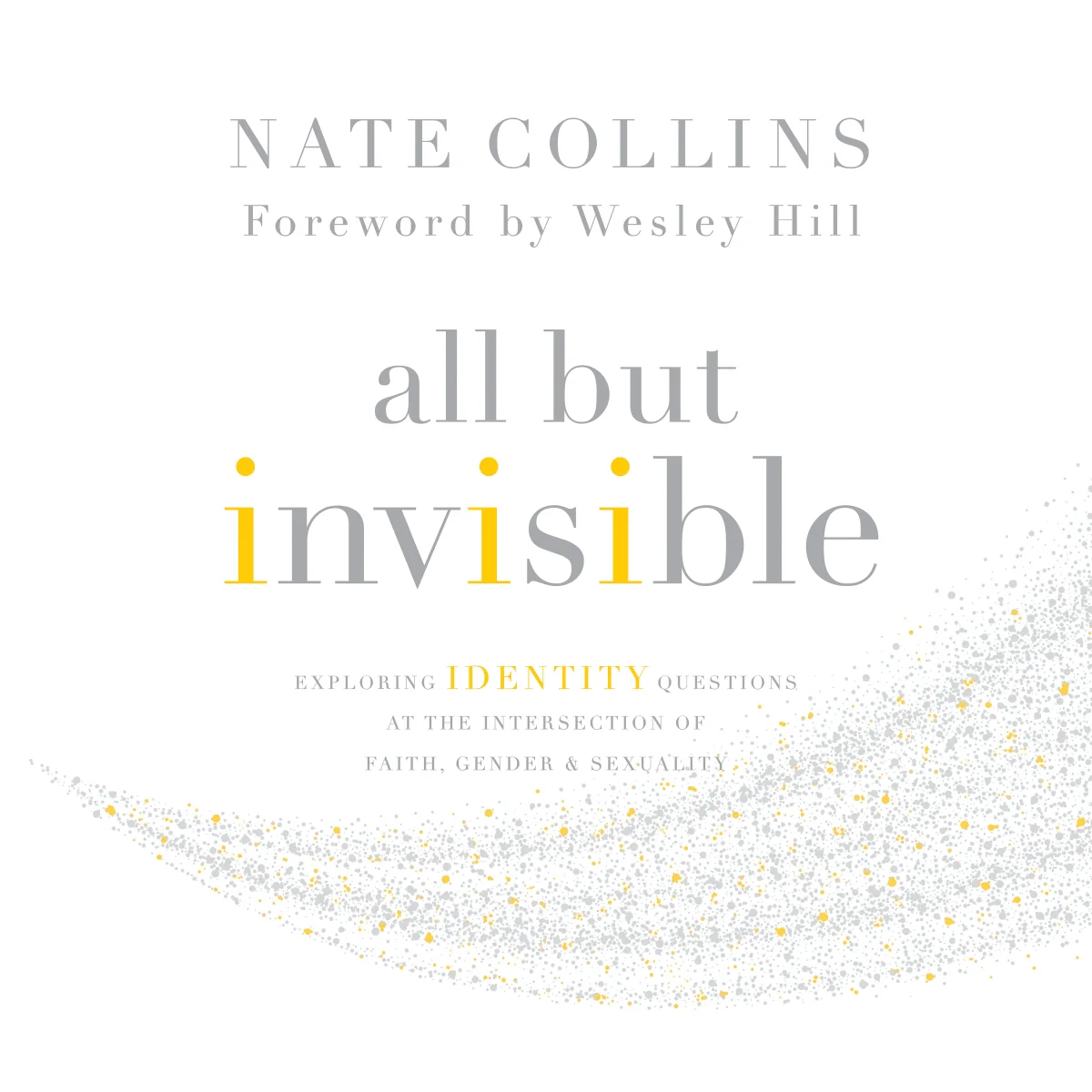
All But Invisible: Exploring Identity Questions at the Intersection of Faith, Gender, and Sexuality - Audiobook (Unabridged)
What does it mean to be gay and a Christian? Beginning with how the Bible describes the Church, author Nate Collins outlines a vision for community life that challenges Christians to examine obstacles that inhibit spiritual unity.
This new vision calls straight and non-straight believers alike to patterns of Christian obedience that respect and honor their similarities and differences.
In All but Invisible, you will discover:
- a theological framework for understanding how Genesis 1-2 describes both gender and sexuality.
- biblical concepts like desire, lust, and temptation, and applies them to modern constructs like sexual attraction and orientation.
- an exploration of the theme of identity, focusing on facets of personal identity that are central to the experience of Christian gender minorities.
Collins looks at what Scripture says about the formation and function of Christian identity, highlighting several theological and sociological tensions. He writes for believers who have a traditional sexual ethic and provides a compelling vision of gospel flourishing for gay, lesbian, and other same-sex attracted individuals.
Product Information
Product Information
Shipping & Returns
Shipping & Returns
Description
What does it mean to be gay and a Christian? Beginning with how the Bible describes the Church, author Nate Collins outlines a vision for community life that challenges Christians to examine obstacles that inhibit spiritual unity.
This new vision calls straight and non-straight believers alike to patterns of Christian obedience that respect and honor their similarities and differences.
In All but Invisible, you will discover:
- a theological framework for understanding how Genesis 1-2 describes both gender and sexuality.
- biblical concepts like desire, lust, and temptation, and applies them to modern constructs like sexual attraction and orientation.
- an exploration of the theme of identity, focusing on facets of personal identity that are central to the experience of Christian gender minorities.
Collins looks at what Scripture says about the formation and function of Christian identity, highlighting several theological and sociological tensions. He writes for believers who have a traditional sexual ethic and provides a compelling vision of gospel flourishing for gay, lesbian, and other same-sex attracted individuals.